Understanding Acid Rain
Introduction: Acid rain is a type of environmental problem that can harm our planet in different ways. It’s important to learn about it because it affects our air, water, and even the things around us.
Acid Rain
- Acid rain is rain that has become more acidic than normal. Rainwater is usually slightly acidic due to the presence of natural gases like carbon dioxide (CO2).
- But when it becomes even more acidic, it can harm our environment.
What Causes Acid Rain?
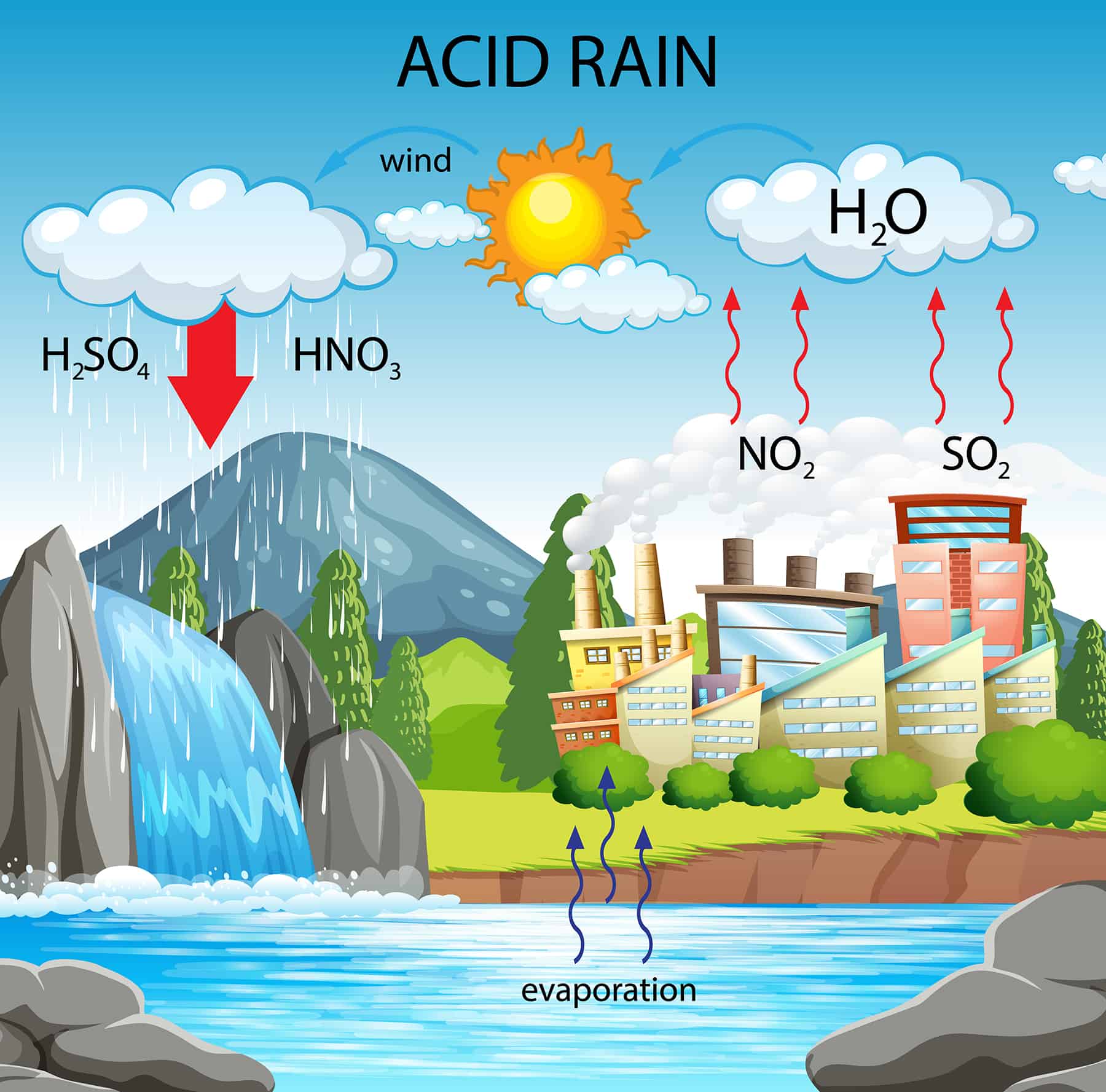
- The main reason for acid rain is air pollution. When we burn fossil fuels like coal, oil, and gas, it releases pollutants into the air. These pollutants are called “sulfur dioxide” (SO2) and “nitrogen oxides” (NOx).
- When SO2 and NOx mix with the air, they create sulfuric acid (H2SO4) and nitric acid (HNO3). These are acids, and when they combine with rain clouds, they make the rain more acidic.
Effects of Acid Rain:
- Harms Nature: Acid rain can damage trees, plants, and aquatic life. It makes lakes and rivers more acidic, which can harm fish and other creatures living in the water.
- Damages Buildings: It can also eat away at buildings and statues made of limestone and marble.
- Affects Health: Breathing in the pollutants that cause acid rain can lead to health problems in humans.
Preventing Acid Rain:
- We can help prevent acid rain by using cleaner sources of energy, like wind and solar power, and by reducing our use of fossil fuels.
- Governments and industries also work together to limit the release of sulfur dioxide and nitrogen oxides into the air.
Conclusion: Acid rain is a problem that affects our environment, but by being more careful about the way we use energy, we can help protect our planet and keep the rain from becoming too acidic. It’s essential for all of us to play our part in keeping our air, water, and earth clean and healthy.