Understanding Ozone Depletion
Introduction: Ozone depletion is a serious environmental issue that affects our planet’s protective shield called the ozone layer. Learning about it is essential because it impacts our health, the environment, and even the weather.
What is the Ozone Layer?
- The ozone layer is a region high up in Earth’s atmosphere, about 10 to 30 kilometers above the Earth’s surface.
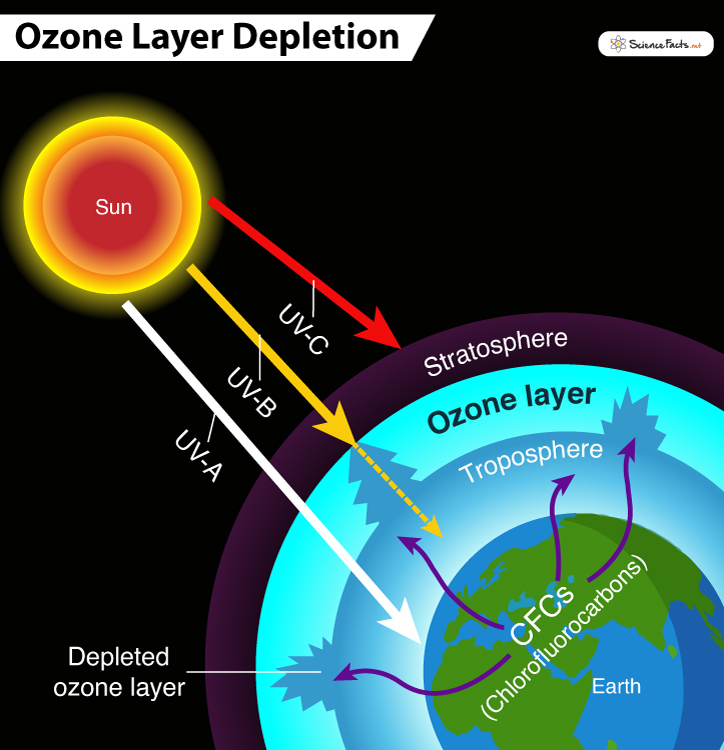
- It contains a special gas called ozone (O3), which is made up of three oxygen atoms. This ozone layer acts like sunscreen for the Earth, protecting us from the sun’s harmful ultraviolet (UV) rays.

What Causes Ozone Depletion?
- Ozone depletion happens because of human-made chemicals called “ozone-depleting substances” (ODS). The most famous ones are chlorofluorocarbons (CFCs) found in old refrigerators and aerosol sprays.
- When these chemicals are released into the air, they rise up and eventually reach the ozone layer. There, they break apart the ozone molecules, reducing the protective layer’s thickness.
Effects of Ozone Depletion:
- More UV Rays: As the ozone layer gets thinner, more harmful UV rays from the sun can reach the Earth’s surface.
- Skin Damage: Increased UV exposure can lead to sunburn, skin cancer, and eye problems in humans.
- Harm to Wildlife: UV rays can harm animals, especially those living in the water, like plankton and corals.
- Climate Change: Ozone depletion can affect the climate by changing wind patterns in the atmosphere.
Preventing Ozone Depletion:
- The world recognized the problem of ozone depletion and took action. In 1987, countries signed the “Montreal Protocol” to phase out the production and use of ozone-depleting substances.
- Many countries have since banned or reduced the use of CFCs and similar chemicals. This international effort has helped the ozone layer start to recover.
Conclusion: Ozone depletion is a serious issue, but it also shows that when the world comes together, we can make a positive change. By using eco-friendly products and supporting efforts to protect the ozone layer, we can help keep our planet safe for future generations.