
Types of Salt
1. Acidic Salt
An acidic salt is formed by the partial neutralization of a diprotic or a polyprotic acid. These salts have ionizable ions along with another cation. Typically, the ionizable is part of the anion. Some acidic salts are used in baking.
Examples:
- Sodium bisulfate (NaHSO₄)

- Potassium dihydrogen phosphate (KH₂PO₄)

Reaction Example: H2SO4+NaOH→NaHSO4+H2O
2. Basic or Alkali Salt
A basic salt is formed by the partial neutralization of a strong base by a weak acid. These salts hydrolyze to form a basic solution. This occurs because the hydrolysis of a basic salt forms the conjugate base of the weak acid in the solution.
Example:
- White lead ()

3. Double Salt
Double salts contain more than one cation or anion and are obtained by the combination of two different salts crystallized in the same ionic lattice.
Example:
- Potassium sodium tartrate (KNaC₄H₄O₆ · 4H₂O), also known as Rochelle salt.

4. Mixed Salts
Mixed salts consist of a fixed proportion of two salts, often sharing either a common cation or a common anion.
Example:
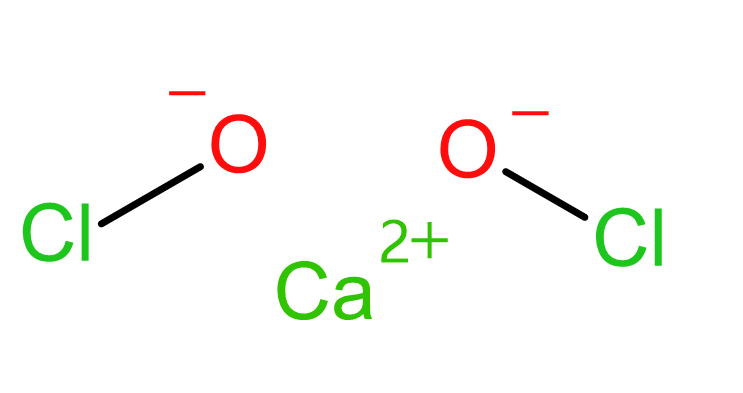
- Calcium oxychloride Ca(OCl₂)
Properties of Salt
-
Differing Properties from Constituent Elements:
- The compound sodium chloride has very different properties from the elements sodium and chlorine.
-
Conductivity:
- Saltwater contains ions and is a fairly good conductor of electricity.
-
Electrostatic Attraction:
- This electrostatic force of attraction holds the ions together, forming a chemical bond between them.
Hydrolysis of a Salt
Hydrolysis of salt refers to the reaction of salt with water. It is the reverse of a neutralization reaction. In this process, when salt undergoes reaction with water, the constituent acid and bases are formed as products. During hydrolysis, the salt dissociates to form ions, either completely or partially, depending on the solubility product of that salt.