
The central nervous system
The central nervous system (CNS) is one of the two main divisions of the nervous system, with the other being the peripheral nervous system (PNS). The CNS consists of the brain and spinal cord, and it plays a fundamental role in processing information, controlling bodily functions, and coordinating responses to external and internal stimuli. Let’s take a closer look at each part of the CNS:
Brain
The brain is the most complex and vital organ in the human body.
It is responsible for a wide range of functions, including:
- Cognition: The brain is where thinking, reasoning, memory, and decision-making occur.
- Emotion: It plays a role in regulating emotions and emotional responses.
- Sensory Perception: The brain processes information from sensory organs (e.g., eyes, ears, skin) to create our perception of the world.
- Motor Control: It controls voluntary and involuntary movements.
- Autonomic Functions: The brain regulates vital functions such as heart rate, breathing, and digestion through the autonomic nervous system.
- Hormone Regulation: It influences the endocrine system, controlling the release of hormones that affect various bodily functions.
The brain is divided into several major regions or lobes, each with specific functions:
- Frontal Lobe: Involved in decision-making, problem-solving, motor control, and personality.
- Parietal Lobe: Responsible for processing sensory information, spatial awareness, and some language functions.
- Temporal Lobe: Plays a role in auditory processing, memory, and language comprehension.
- Occipital Lobe: Primarily responsible for visual processing.
Additionally, the brainstem connects the brain to the spinal cord and controls basic life functions like breathing and heart rate. The cerebellum is responsible for coordination and balance.

Spinal Cord
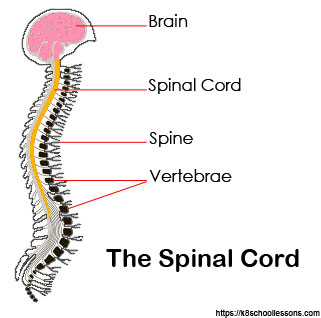
The spinal cord is a long, tubular structure that extends from the base of the brain down the vertebral column (spine).
It’s a delicate structure that contains nerve bundles and cells that carry messages from your brain to the rest of your body.
Your spinal cord is one of the main parts of your nervous system.
Its primary functions include:
- Information Transmission: The spinal cord serves as a relay station for sensory and motor information. Sensory information from the body is transmitted to the brain, while motor commands from the brain are sent to muscles and glands.
- Reflexes: It controls reflex actions, allowing for quick, automatic responses to stimuli without involving the brain. For example, when you touch a hot surface, your spinal cord can initiate a withdrawal reflex before the brain processes the pain signal.
- Communication: It relays messages between the brain and the rest of the body, allowing for voluntary and involuntary actions.
The spinal cord is divided into segments, each of which corresponds to a specific region of the body. Nerves that branch off the spinal cord carry sensory and motor signals to and from these body regions.
Overall, the CNS plays a central role in regulating and coordinating virtually all bodily functions, from conscious thought and movement to unconscious processes like breathing and digestion. It is a highly intricate and dynamic system that allows us to interact with our environment and maintain homeostasis within our bodies. Damage or dysfunction in the CNS can have significant implications for an individual’s health and well-being.

